
A microwave oven has become a useful part of many modern kitchens. Whether you want to warm up last night’s dinner, make a quick breakfast, defrost something from the freezer or bake a treat for the weekend, a microwave just makes everyday cooking easier. It saves time, cuts down the effort of reheating and gives you a lot more flexibility when you’re putting a meal together.
Picking the right one, though, isn’t always easy. Step into an electronics store or scroll through an online shopping site and you’ll see dozens of models, all with different prices, capacities, cooking modes and features. Some are built mainly for reheating, while others can grill, bake and cook a full meal.
The most expensive model isn’t automatically the best one for your home. What really matters is how you cook, how big your family is, how much kitchen space you have and what you can afford. So before you spend a rupee, it helps to know what the different types of microwave ovens actually offer.
Here’s a practical guide to choosing the best microwave oven for your kitchen in 2026.
Understand the Different Types of Microwave Ovens
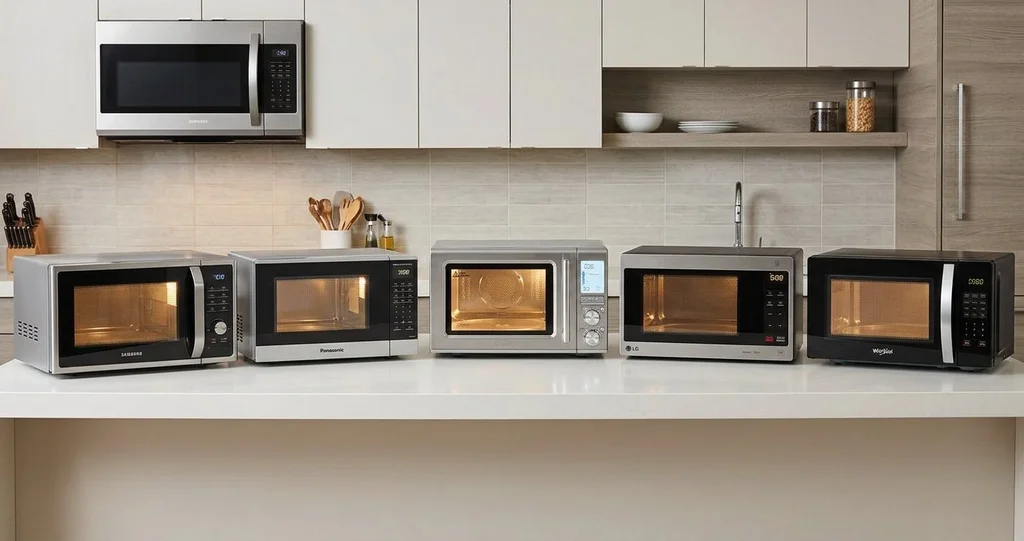
Start by figuring out which type you really need. Most home microwaves fall into three categories: solo, grill and convection.
Solo Microwave Oven
A solo microwave is the basic model, made for everyday heating, cooking and defrosting. It suits people who want a simple appliance and don’t want to pay for extra features.
You can warm milk, heat leftovers, make instant meals and cook a few vegetables in it. What it can’t do is grill or bake with convection.
If you live alone or have a small family and mostly use the microwave for reheating, a solo model will probably do the job.
Grill Microwave Oven
A grill microwave gives you grilling on top of regular microwave cooking. It works well for grilled sandwiches, paneer, vegetables and some meat dishes.
It’s a good pick if you love grilled food but don’t often bake cakes or bread.
Convection Microwave Oven
A convection microwave is the most flexible of the three. It combines microwave heating with convection technology, so you can bake, roast, grill and cook all sorts of dishes.
Cakes, cookies, pizzas, roasted vegetables and plenty of other recipes are all possible. If you like experimenting in the kitchen, or you’d like one appliance to handle many jobs, a convection microwave is worth a look.
Choose the Right Microwave Oven Capacity
Capacity is measured in litres, and the right size depends mainly on how many people will use it and what you cook.
A tiny microwave in a big family’s kitchen quickly becomes a hassle. On the other hand, a large one can hog counter space if you only use it now and then.
Here’s a rough guide:
| Family Size | Suggested Capacity |
|---|---|
| 1–2 people | 15–20 litres |
| 2–3 people | 20–25 litres |
| 3–4 people | 25–30 litres |
| 4–5 people | 28–32 litres |
| Large family | 32 litres or above |
Treat these as suggestions, not strict rules. Your cooking style matters too. If you often make large dishes or bake at home, a bigger convection microwave may be more convenient even when there are only three people in the family.
Check the Wattage and Cooking Performance
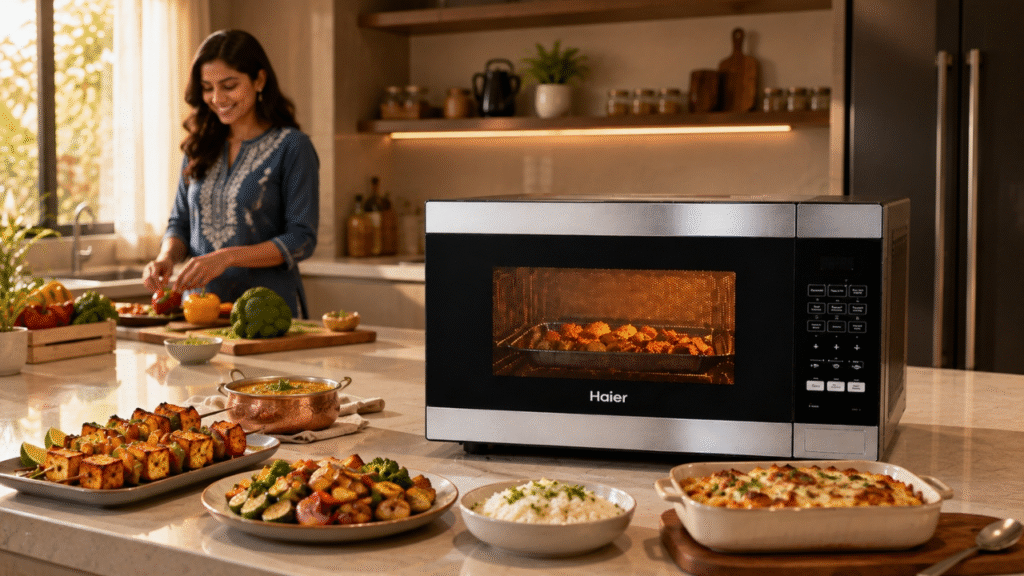
Wattage affects how fast a microwave heats and cooks. Models with higher output power generally cook faster, although the actual result also depends on the food, the quantity and your settings.
For regular home use, most microwave ovens offer an output between roughly 700 and 1,200 watts. Always check the cooking power listed in the product specifications before you buy.
A higher-wattage model helps if you often cook bigger portions. Still, don’t decide on wattage alone. Capacity, cooking technology and the available power settings matter just as much.
Also look at the electrical input rating, because the power the appliance draws can be different from its microwave output power.
Look for Useful Cooking Features
Modern microwaves come loaded with features. Some are genuinely handy, and some you’ll probably never touch.
Auto Cook Menus
These are preset programs for popular dishes. You pick the food option and enter the weight or number of servings, depending on the model. They’re especially helpful if you’re still getting the hang of using a microwave.
Defrost Function
Defrost thaws frozen vegetables, meat and other food. It’s a lifesaver when you forget to take something out of the freezer in advance.
Child Lock
A child lock stops the controls from being pressed by accident, which makes it a useful safety feature if you have young kids at home.
Timer and Power Settings
Adjustable power levels and timers give you better control over different recipes. Warming milk, for instance, needs a very different approach from cooking vegetables or defrosting food.
Pick features based on what you’ll use daily, and don’t pay extra for functions that will sit unused.
Compare Energy Consumption Before Buying
Electricity use is another thing to think about. A higher-powered microwave may draw more electricity when running at full output, but your real consumption depends on cooking time, the power settings you choose and how often you use it.
Check the rated input power and any energy-related details instead of assuming a model is energy-efficient. If you mostly reheat food, shorter cooking times and the right power settings can help keep your electricity use in check. It’s also worth finding out whether the microwave has an energy-saving standby mode.
Check the Interior Design and Cleaning Convenience
Many buyers forget about cleaning while comparing models, but it matters a lot once you start using the microwave regularly.
Food splashes, oil stains and spilled liquids build up inside, and if the interior is hard to clean, maintaining it becomes a chore. Look for a smooth interior that you can wipe down easily with a soft cloth. A removable glass turntable is also handy, since you can take it out and wash it separately.
Some models even have extra cleaning features like steam-cleaning programs. They make upkeep easier, but you should still follow the manufacturer’s cleaning instructions. And avoid harsh chemicals or abrasive scrubbers, as they can damage the interior surface.
Consider the Microwave Oven’s Size and Kitchen Space
Before you order a microwave online, measure the spot where you plan to keep it. Note the width, height and depth of the appliance, and leave the ventilation clearance the manufacturer recommends. A microwave shouldn’t be shoved into a tightly enclosed space unless it’s specifically designed for that kind of installation.
If your counter space is limited, a compact solo microwave may be more practical than a big convection model. For built-in installations, check the required cabinet dimensions and ventilation instructions carefully.
In the end, it should fit comfortably without making your kitchen counter awkward to use.
Compare Microwave Oven Brands and Warranty
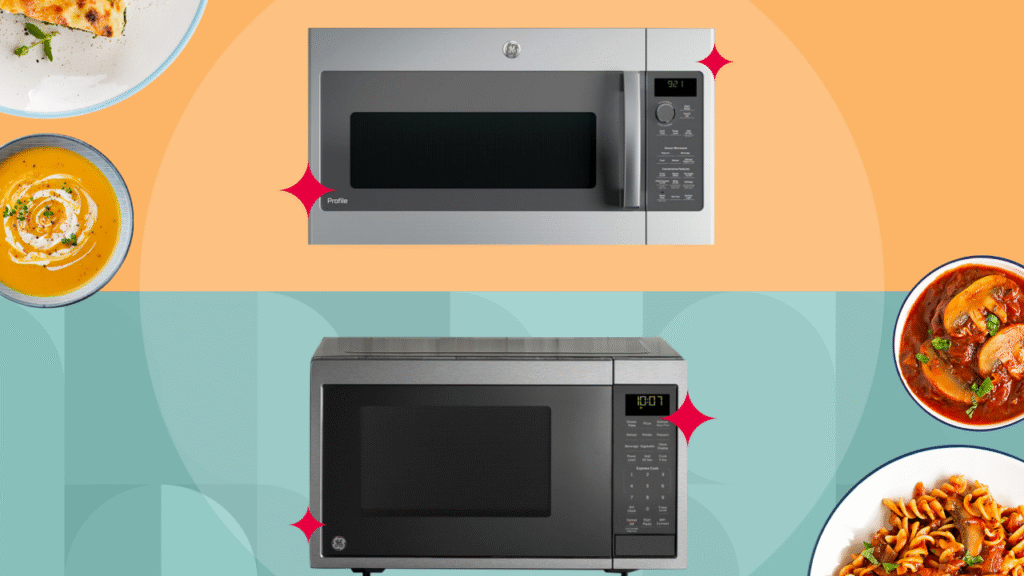
Brand reputation and after-sales service matter a lot when you’re buying an electrical appliance. In India, buyers commonly compare models from LG, Samsung, IFB, Panasonic and Whirlpool.
Don’t choose a brand just because it’s popular. Compare the actual model, its features, customer feedback and the service support available in your area.
Before buying, check these things:
- Product warranty
- Magnetron warranty and its specific conditions
- Availability of authorised service centres
- Spare parts availability
- Installation charges
- Customer support options
Read recent customer reviews too, and watch out for repeated complaints about heating performance, door problems, noise or slow service.
Set a Budget and Compare Prices
Prices vary with capacity, brand, technology and extra features. A basic solo microwave is usually the most affordable, while grill and convection models generally cost more.
Decide how much you want to spend first, then compare models within that range. You can check prices on Amazon, Flipkart and the official brand websites. During festive sales and special shopping events, some models may come with discounts or bank offers.
That said, don’t let a big discount percentage sway you too much. Look at the final selling price, the warranty and the specifications. A reasonably priced microwave that has the features you actually need is often a better buy than an expensive one packed with functions you’ll never use.
Common Mistakes to Avoid When Buying a Microwave Oven
A few simple slip-ups can leave you with a purchase you regret:
- Ignoring capacity: Always think about your family size and cooking habits before choosing a model.
- Buying unnecessary features: Don’t pay extra for convection or grilling if all you need is basic reheating.
- Forgetting kitchen measurements: Check the dimensions and ventilation requirements before you order.
- Ignoring warranty conditions: Read the warranty details, especially for the magnetron and other key components.
- Not checking cookware compatibility: Use microwave-safe utensils and follow the manufacturer’s instructions for each cooking mode.
- Choosing only by price: A cheaper model may not give you the capacity or features you need.
Spending a little time comparing these details can save you from disappointment later.
FAQ’s
1. Which microwave oven is best for home use in 2026?
Solo, grill and convection models are popular choices depending on cooking needs.
2. What size microwave oven is suitable for a family?
A 25–30 litre microwave is suitable for many families of three to four people.
3. Which is better: solo or convection microwave?
Solo is good for reheating, while convection is better for baking, grilling and cooking.
4. Which microwave oven brands are popular in India?
LG, Samsung, IFB, Panasonic and Whirlpool offer popular models.
5. What features should I check before buying a microwave?
Check capacity, wattage, cooking modes, child lock and warranty.