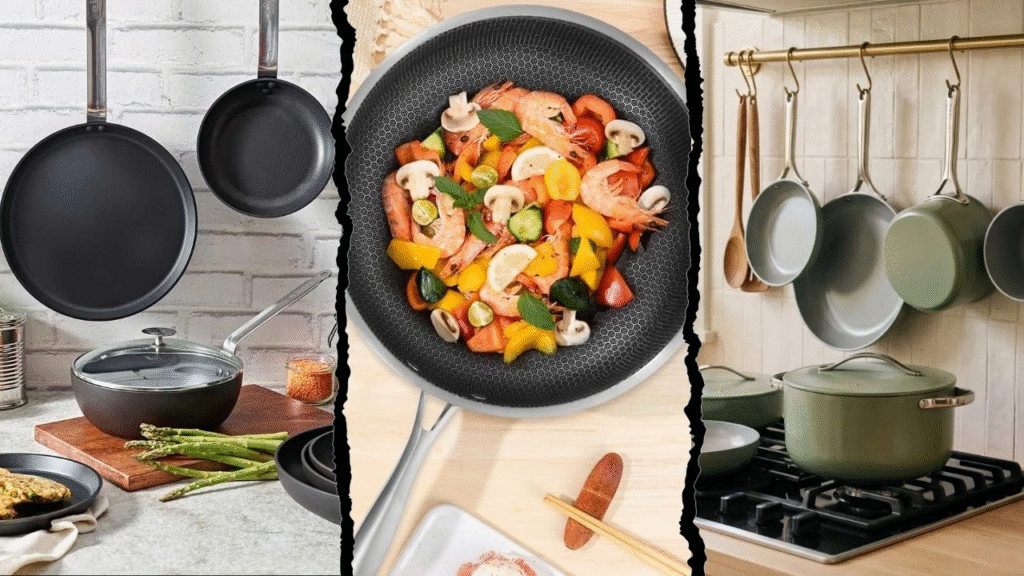
Choosing the right cookware can make everyday cooking much easier, especially if you prepare meals at home regularly. A good non-stick pan lets you cook with less oil and keeps food from sticking. It also makes cleaning far less of a chore. Whether you’re making a morning omelette, spreading dosa batter or cooking vegetables for dinner, the right pan saves time in the kitchen. But buying non-stick cookware isn’t just about picking a nice design or a popular brand. Coatings, materials, sizes and heating abilities all differ from product to product.
Some pans are great for everyday cooking, while others are better kept for occasional use.
If you’re planning to upgrade your kitchen in 2026, understanding these features can help you find the best non-stick cookware for your needs and budget.
Why Is Non-Stick Cookware Popular in Indian Kitchens?
Non-stick cookware has become a common choice in many Indian homes because it makes cooking more convenient. Traditional cooking sometimes needs extra oil to stop food from sticking, but a good-quality non-stick surface can cut that down.
One of the biggest advantages is easy food release. Eggs, pancakes, dosa and fish are usually easier to flip or lift out without breaking.
Cleaning is another reason people like non-stick cookware. Food residue usually comes off with a soft sponge and mild dishwashing liquid, which keeps everyday kitchen cleanup simple.
Non-stick pans also come in many sizes and designs. You can find small frying pans for breakfast, deep kadai-style cookware for vegetables and larger pans for family meals.
1. Check the Non-Stick Coating Quality
The coating is one of the most important things to look at when buying non-stick cookware. It creates the smooth surface that stops food from sticking while you cook.
Most non-stick cookware uses either PTFE-based or ceramic-based coatings.
PTFE Non-Stick Coating
PTFE coatings are widely used in traditional non-stick pans. They offer good food release and make cooking with less oil easier. However, they shouldn’t be overheated, because very high temperatures can damage the coating and may release harmful fumes.
Ceramic Non-Stick Coating
Ceramic-coated cookware is another popular option. It’s often marketed as an alternative to traditional non-stick coatings. How well it performs and how long it lasts depends on the coating quality and the manufacturing process.
Before you buy, check the manufacturer’s instructions, temperature limits and warranty details. Stay away from cookware with unclear coating information.
2. Choose the Right Cookware Material
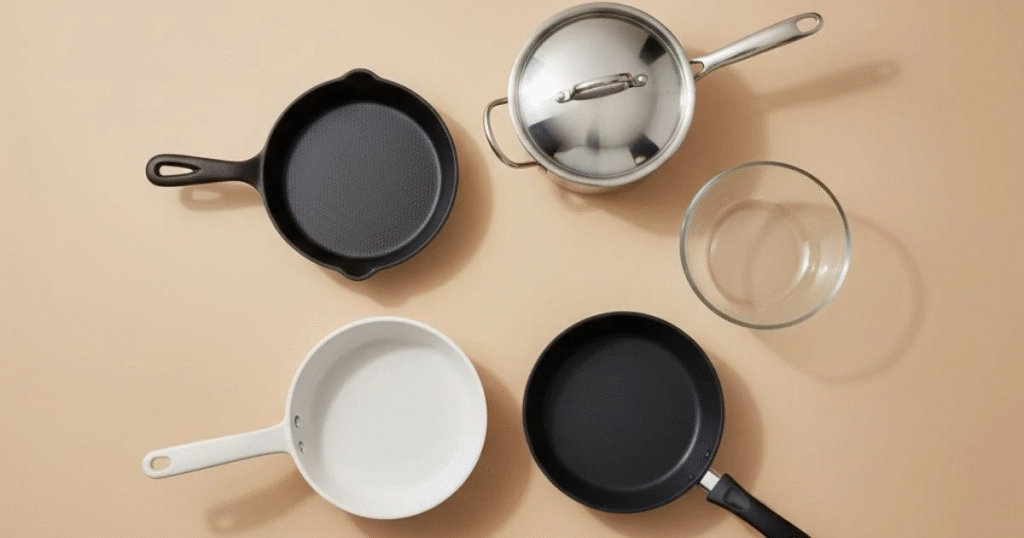
The material under the non-stick coating affects how quickly the pan heats up and how evenly it spreads heat.
Aluminium Cookware
Aluminium is commonly used in non-stick cookware because it’s lightweight and heats up fairly quickly. It’s handy for everyday cooking, especially breakfast or simple meals.
Hard-Anodised Aluminium
Hard-anodised aluminium goes through a special treatment that makes its surface harder than regular aluminium. It’s generally more durable and offers good heat distribution.
Stainless Steel Base
Some non-stick cookware comes with stainless steel bases. These can add strength and may suit certain cooktops, depending on the product design.
Pick a material that matches your cooking habits instead of focusing only on looks.
3. Check Compatibility with Your Cooktop
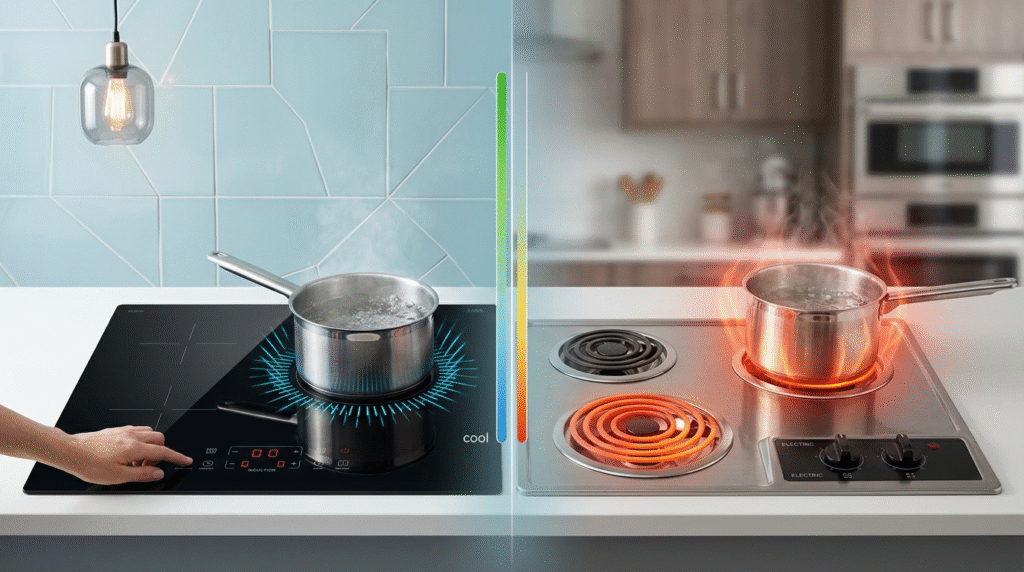
Not every non-stick pan works on every kind of stove. This matters especially if you use an induction cooktop.
Before buying, check whether the cookware supports your cooking surface.
- Gas Stove: Most conventional non-stick pans work well on gas.
- Induction Cooktop: Look for cookware specifically labelled induction-compatible, usually with a magnetic base.
- Electric Cooktop: Check the manufacturer’s compatibility instructions.
- Ceramic Cooktop: Choose cookware with a flat base so it makes proper contact with the heating surface.
If your kitchen has an induction cooktop, never assume that every aluminium non-stick pan will work on it.
4. Select the Right Size and Shape
Cookware size matters more than many buyers realise. A small pan may be fine for one person but awkward when you’re cooking for a family.
Think about the dishes you make most often.
| Cookware Type | Common Use |
|---|---|
| Small frying pan | Eggs and omelettes |
| Medium frying pan | Pancakes and shallow frying |
| Deep kadai | Vegetables and curries |
| Flat tawa | Roti, dosa and cheela |
| Large cooking pan | Family meals and stir-frying |
For a small household, a frying pan and a medium-sized kadai may be enough. Larger families may do better with a complete non-stick cookware set.
Also check the depth, handle length and overall weight before you buy.
5. Look for Comfortable Handles and Strong Construction
A cookware handle should feel comfortable and give you a secure grip. This matters even more when the pan is full of hot food.
Some non-stick pans have heat-resistant handles, while others have metal handles that can get hot during cooking.
Check whether the handle is firmly attached to the body of the cookware. Loose fittings can make everyday use uncomfortable and unsafe.
The lid is another useful feature. A well-fitting glass lid lets you keep an eye on the food without opening the pan again and again.
Small design details can make a real difference when you use cookware every day.
6. Compare Different Non-Stick Cookware Brands
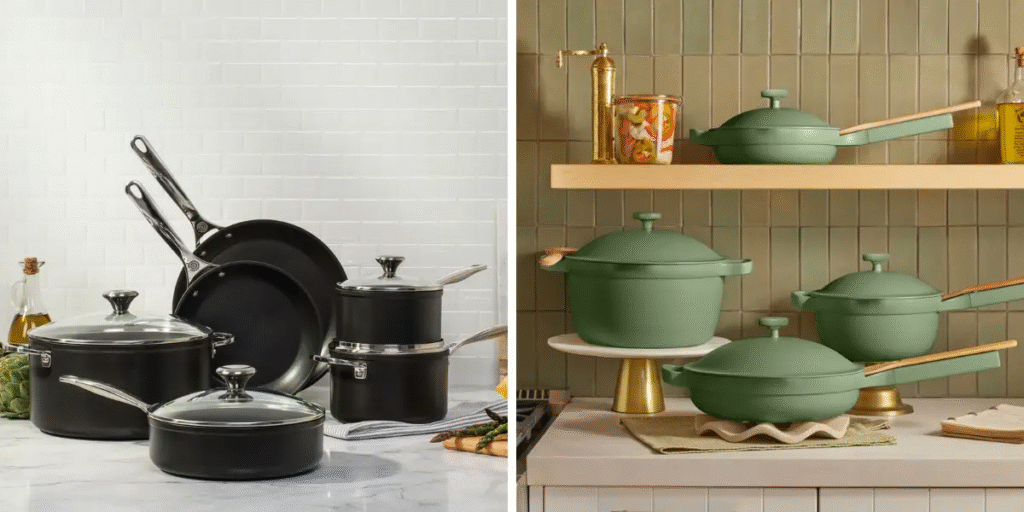
Before buying, compare several non-stick cookware brands instead of going with the first product you see online.
In India, shoppers commonly look at brands such as Hawkins, Prestige, Pigeon, Wonderchef and Cello. Each offers different cookware collections, designs and price ranges.
Rather than focusing only on the brand name, compare the following:
- Coating type and quality.
- Cookware material and thickness.
- Induction compatibility.
- Handle design and comfort.
- Available sizes and product combinations.
- Warranty and customer support.
- Cleaning and maintenance instructions.
Customer reviews can also show you practical issues such as coating wear, handle quality and heat distribution. Read both positive and negative reviews before you decide.
7. Consider Your Budget and Overall Value
Non-stick cookware comes in many price ranges. A higher price doesn’t automatically mean better quality, and a cheaper product isn’t always a poor choice.
Your budget should depend on how often you cook and which features you really need.
| Budget Category | What to Look For |
|---|---|
| Budget-friendly | Basic frying pans and simple designs |
| Mid-range | Better construction and additional cookware options |
| Premium | Advanced materials, stronger construction and additional features |
If you cook every day, investing in a well-made frying pan or kadai may make more sense than buying a large set with pieces you’ll rarely use.
Always compare product specifications and warranty before making a decision.
8. Understand Safe Cooking and Maintenance
Safe Cooking and Maintenance
Use wooden, silicone or heat-resistant nylon utensils instead of sharp metal tools.
Never heat an empty non-stick pan for too long. Use low or medium heat for everyday cooking.
Allow the cookware to cool naturally before washing to avoid sudden temperature changes.
Use a soft sponge and mild dishwashing liquid. Avoid abrasive scrubbers and harsh cleaners.
Place pans carefully and use protective separators when stacking to prevent scratches.
If the coating starts peeling or flaking, stop using the cookware and follow the manufacturer’s replacement guidance.
Even good-quality non-stick cookware needs proper care. Wrong cleaning and cooking habits can shorten the life of the coating.
Here are some practical maintenance tips:
- Use wooden, silicone or heat-resistant nylon utensils instead of sharp metal tools.
- Avoid overheating an empty non-stick pan.
- Cook on low or medium heat unless the manufacturer recommends otherwise.
- Let the cookware cool before washing.
- Use a soft sponge and mild dishwashing liquid.
- Avoid abrasive scrubbers and harsh cleaning products.
- Store pans carefully to prevent scratches.
If the coating starts peeling, flaking or showing serious damage, stop using the cookware and follow the manufacturer’s replacement guidance.
Good maintenance helps preserve the cooking surface and extends the life of your cookware.
9. Should You Buy Individual Pans or a Non-Stick Cookware Set?
This depends on what your kitchen needs.
Buying individual pieces is a sensible choice if you only need a frying pan, tawa or kadai. It also lets you pick different sizes and materials to suit the way you cook.
A non-stick cookware set may be more convenient if you’re setting up a new kitchen. Sets often include several pans and cooking utensils in matching designs.
However, check the contents carefully. Some sets include pieces you may never use in everyday cooking.
Compare the prices of the individual products with the price of the complete set to see whether the package really offers good value.
FAQ’s
Q1. What is the best non-stick cookware for everyday cooking?
A good-quality non-stick frying pan or kadai with a durable coating is suitable for everyday cooking.
Q2. Which coating is better for non-stick cookware?
PTFE and ceramic coatings are popular options. The right choice depends on cooking needs, product quality and maintenance.
Q3. Is non-stick cookware safe for daily use?
Yes, when used according to the manufacturer’s instructions and without overheating or damaging the coating.
Q4. Can non-stick cookware be used on an induction cooktop?
Yes, but the cookware must have an induction-compatible base.
Q5. How long does non-stick cookware last?
Its lifespan depends on coating quality, cooking habits and maintenance.